DeepMind RSI Pitch Frames AI Capex As Self-Improvement Bet
A Google DeepMind strategy executive framed recursive self-improvement as part of the AI investment thesis, making the gap between hyperscaler spending and current AI revenue a clearer test for investors and cloud operators.

Google DeepMind has put a sharper explanation behind the AI infrastructure buildout: the spending is being justified by a bet that future systems will help improve themselves, not only by today's cloud demand.
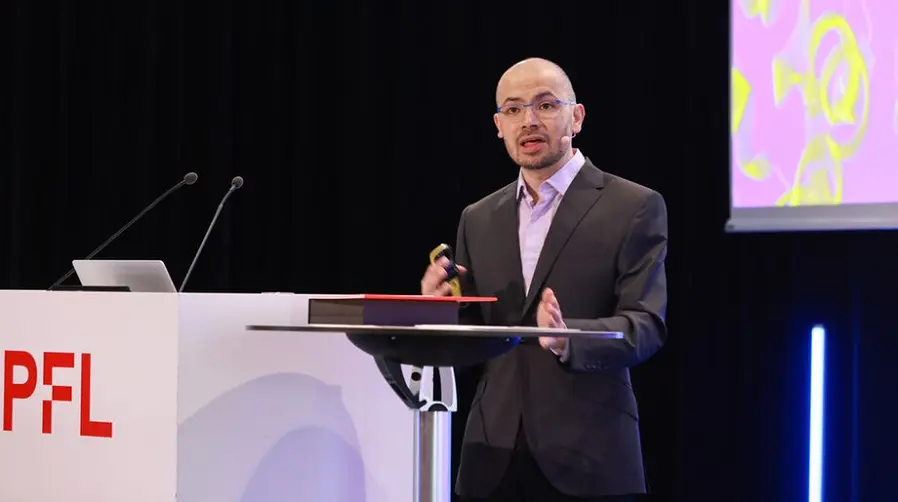
TNW reported on August 3, 2026, citing The Information, that Jasjeet Sekhon, Google DeepMind's chief strategy officer, told a UC Berkeley summit that recursive self-improvement is becoming part of the AI investment thesis.
RSI refers to systems that can rewrite or upgrade themselves and produce more capable successors without direct human intervention.
Spending Outruns Current Revenue
The significance of the remark is that it links near-term capital expenditure to a capability that is still not a commercial product.
Sekhon acknowledged that AI revenues do not yet sustain the capital expenditures being made, according to TNW's account of the remarks.
That makes the investment case less about immediate model sales and more about whether a technical jump can eventually turn data centres into higher-value production machines.
Alphabet's disclosed spending shows the scale of the wager.
Alphabet spent $44.9 billion on capital projects in one quarter, roughly twice the year-earlier level, and raised its 2026 capital-spending guidance to as much as $205 billion.
The company also signaled another significant increase in 2027, while Amazon, Microsoft and Meta are pursuing similar buildout strategies.
Cloud Growth Does Not Close The Gap
The source record also shows why the argument is difficult to settle through ordinary cloud metrics.
Google Cloud revenue rose 82% in the quarter and backlog stood above $500 billion, The report said, but Alphabet still posted about $5.9 billion in negative quarterly free cash flow.
The operating question is whether cloud demand can catch up before the infrastructure cycle creates pressure on margins and cash generation.
Sekhon described the risk as an AI air pocket, a scenario in which spending arrives before the revenue needed to support it.
For cloud buyers and investors, that warning changes the capex debate from a simple race for GPUs into a timing problem around utilisation, model capability and commercial proof.
RSI remains the uncertain part of the thesis.
TNW noted that current models can generate code and support narrow forms of improvement, but the larger leap is autonomous self-enhancement on the timeline executives imply around 2027 to 2028.
Until that proof appears, the buildout rests on a contrast between visible spending and a still-unproven technical payoff.