Canonical Funds Bristol C-To-Rust Research For Ubuntu Security Tools
Canonical is funding a University of Bristol PhD to test automated C-to-Rust migration for Ubuntu security tools, using AppArmor and snap-confine as production case studies.

Canonical is funding a three-year University of Bristol PhD to test whether large C codebases can be moved into Rust without losing behavioural correctness, DeveloperTech reported, turning a memory-safety goal into a research problem for Ubuntu security tooling.
The project pairs Canonical with Bristol's programming languages group and matched funding from UK Research and Innovation.
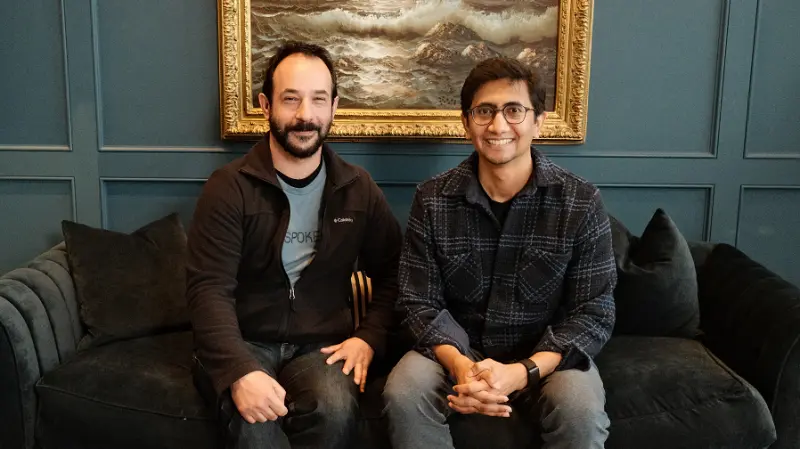
Professor Meng Wang will lead the academic work, with Dr Cristina David and Canonical engineering vice president Jon Seager acting as co-supervisors.
Canonical has already adopted Rust-based replacements in Ubuntu, including uutils coreutils and sudo-rs, but the harder target is mature C software that has accumulated production assumptions over many years.
AppArmor and snap-confine will serve as industrial case studies because both sit inside Ubuntu's security model and contain the low-level behaviour that makes clean translation difficult.
The research plan breaks the migration problem into scheduling, translation, validation, debugging and repair.
Scheduling would divide a repository into pieces while preserving enough context about types, dependencies and behaviour.
The translation stage would use models trained or fine-tuned on C-to-Rust examples, while validation would compare the generated Rust with the original program through fuzzing and formal equivalence methods.
Seager framed generation as only one component in the system.
“Generated code should be treated as untrusted until there is evidence that it preserves the desired behaviour,” he said, linking the work to a broader view that AI-assisted development needs constraints, feedback and verification rather than compiler retries alone.
The unresolved technical questions include repository partitioning, undefined C behaviour, pointer-heavy interfaces, concurrency and operating-system boundaries.
Those issues explain why Canonical is treating the effort as research rather than a short engineering sprint.
Alex Wood, the PhD student selected for the role, brings experience in compiler construction, functional programming, Rust, low-level security engineering and cryptographic protocol implementation.
The project is due to begin later this year, with a successful outcome measured not only by generated Rust but also by stronger decomposition, validation, repair and translation-dataset methods.