AWS Calvert Data Centre Exit Highlights Local Power-Site Approval Risk
Data Center Knowledge reported that AWS withdrew a 2.5 million-square-foot Maryland data centre proposal as Calvert County prepares to consider a six-month moratorium on new projects.

Amazon Web Services has pulled a proposed 2.5 million-square-foot Maryland data centre plan as local officials prepare to consider a temporary pause on new projects, Data Center Knowledge reported.
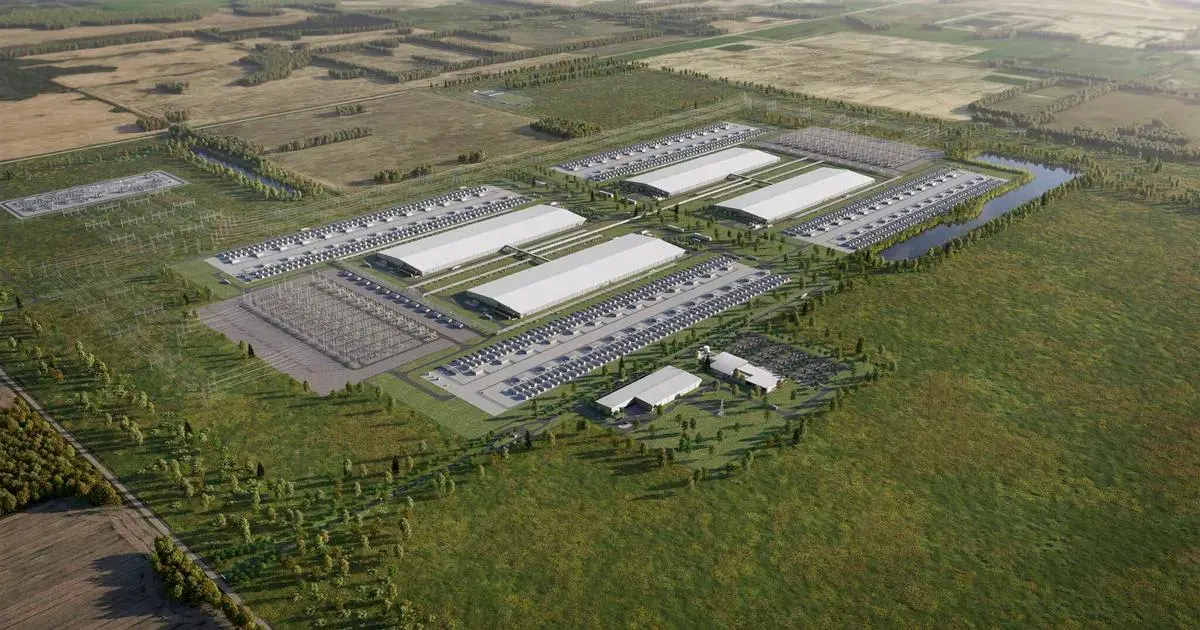
The withdrawn Calvert County proposal covered three campuses on 200 acres beside the Calvert Cliffs Nuclear Power Plant, with a design for eight data centre buildings and up to 500 MW of capacity supplied by Constellation Energy.
That power-adjacent location did not remove the political constraint around the project.
Calvert County officials confirmed the withdrawal in an Aug. 4 notice, and a separate county announcement placed a public hearing on a six-month data centre approvals moratorium on the Aug. 18 calendar.
AWS framed the decision as an infrastructure-priority choice rather than a direct concession to local pressure.
The company’s explanation cited development timelines, operational requirements and the ability to deliver quickly for customers, while leaving open whether the site could return later.
The county’s proposed moratorium would give officials time to review zoning text amendments covering data centres and heavy industrial use conditions, and to complete any needed studies or analysis.
One cancelled hyperscale filing has therefore become a planning signal for other projects that may seek county approvals.
Local politics had already shifted before the notice.
Commission President Todd Ireland, Vice President Mark Cox and Commissioner Earl Hance were among three incumbents defeated in a June 23 Republican primary after earlier resistance to pausing data centre development.
Maryland is not the only pressure point for AWS.
A separate 12-month permit moratorium in Worcester County affects the company’s proposed cable landing station in Ocean City, showing that data centre and network infrastructure can face similar local approval bottlenecks.
Neither AWS nor Calvert County linked the withdrawal directly to opposition, but the resistance was visible.
A Change.org petition against the Calvert project had attracted more than 10,000 signatures, and moratoriums have become a tool for local governments seeking more time before approving large campuses.
Omdia analyst Alan Howard treated the timing as notable because the cancellation and moratorium hearing announcement landed together.
His assessment was that operators may increasingly cut losses and move on when political risk, time and project effort outweigh the value of pursuing a difficult site.
The nuclear-power adjacency made the Calvert County plan especially useful as a test case.
Access to large power sources is often seen as a data centre advantage, but the cancelled proposal shows that available electricity does not settle zoning, community acceptance or county-level political risk.
Lee Feldman, senior adviser for local government strategy at Zencity, identified four drivers behind community opposition: hyperscale campus size, developer speed relative to local planning systems, lack of transparency in some developments and rising public concern about AI.
The commercial risk is a slower and less predictable site-selection cycle.
Power access, utility participation and customer demand may not be enough when county boards, residents and planning staff regard the approval process as incomplete.
That leaves developers with a narrower path: secure the power, but also arrive early enough with residents, local leaders and planning agencies to make a campus legible before it reaches a vote.