Amazon Leo FCC Filing Seeks 5,105 Satellites For D2D Network
Amazon Leo applied for US FCC permission to deploy 5,105 low Earth orbit satellites for direct-to-device service, but Ookla data cited by Telecoms leaves paid usage evidence uneven.

Amazon Leo's direct-to-device plan now depends on a second satellite constellation rather than only the Globalstar assets it bought in April.
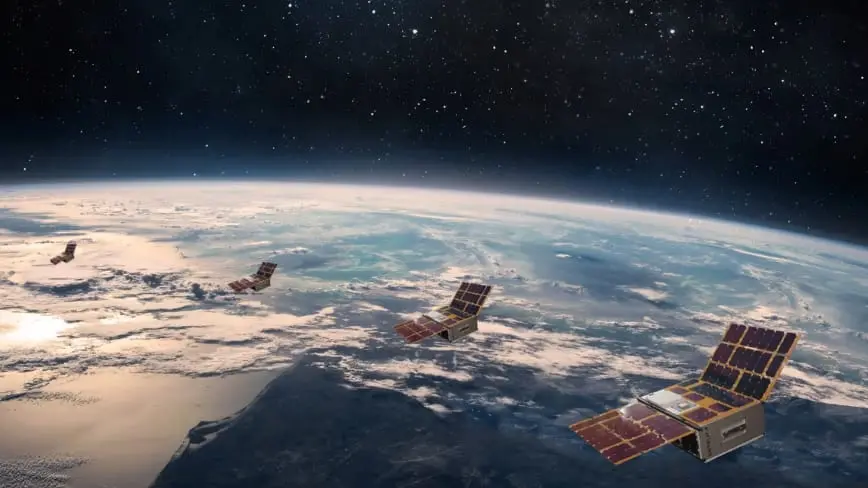
Telecoms reported that the company applied to the US Federal Communications Commission for permission to deploy 5,105 additional low Earth orbit satellites, with deployment intended to begin in 2028.
The filing turns Amazon's mobile-satellite strategy into a spectrum and orbital-capacity question.
Telecoms reported that the proposed system would sit alongside Globalstar's HIBLEO and C-3 constellations and Amazon's broadband network, which is on course to reach 3,232 satellites by the end of July 2029.
FCC Filing Sets A 5,105-Satellite D2D Scope
The planned direct-to-device system is split across five orbital shells.
Three mid-latitude shells would cover heavily populated regions, while two polar shells would extend coverage to higher-latitude routes and remote areas.
The filing describes in-orbit signal processing before traffic is relayed, with inter-satellite communication handled through wireless optical links.
Beam-forming and beam-hopping would steer concentrated signals toward specific coverage areas, while mobile-device links would use L-band and S-band spectrum.
Ground-station connectivity uses a different radio path.
The satellite-to-earth segment would rely on dedicated Ka-band and V-band links, separating handset access from the backhaul channels needed to move traffic into terrestrial networks.
Spectrum Coordination Shapes The Rollout
The D2D system was engineered to protect other spectrum users and comply with domestic and international frequency-allocation frameworks, Amazon Leo says.
The company also describes active coordination with satellite operators as part of its interference-control record.
The mobile-service pitch is broader than emergency messaging.
The proposed constellation covers disaster response, fleet management, remote worksites, supply-chain operations, remote sensors and handset connectivity where terrestrial networks are impractical, too expensive or exposed to disruption.
Operator partnerships remain part of the deployment path.
Carrier partnerships are necessary to fill coverage gaps, so commercial availability depends on regulatory approval, spectrum coordination and operator integration rather than spacecraft deployment alone.
Ookla Data Leaves The Business Case Uneven
Demand evidence is not uniform.
Telecoms cited Ookla data showing global D2D connections rising 24.5% between July 2025 and March 2026, while the same account placed UK O2 satellite connectivity at £3 per month since February and described usage as intermittent.
The adoption record also contains a regional warning.
Separate Ookla findings indicate that US and Canadian D2D connections declined after T-Mobile US and Rogers ended free trials, suggesting that paid usage may not align with technical coverage.
FCC approval and named mobile-operator launch terms remain outside the public record.