A Ballot Shortage Is Not a Normal Election
Ballot shortages disrupted voting at several polling stations in Seoul and other areas during the June 3 election, leaving some voters waiting for hours and raising concerns that others may have left without voting. The National Election Commission blamed higher-than-expected turnout, but ballot supply should be based on the assumption that every eligible voter may cast a vote. The practical question is whether the government and election authorities publicly explain the failure, identify responsibility and prevent any repeat of the same breakdown.
South Korea has just witnessed an election-management failure that should be unthinkable in a modern democracy.
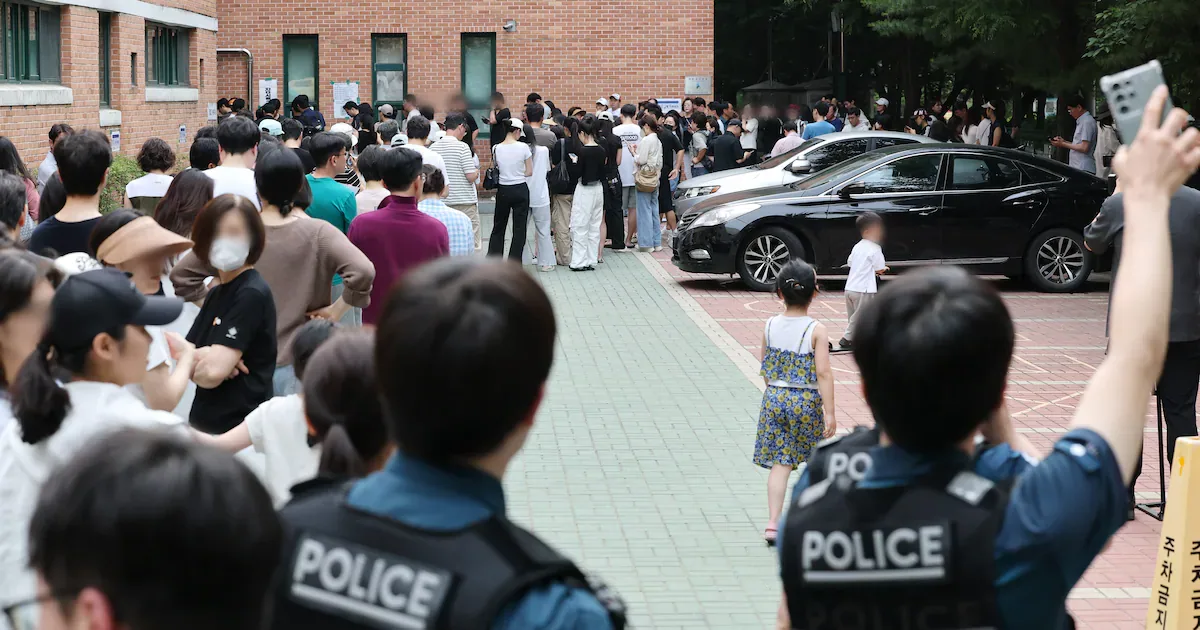
On June 3, voting was halted or delayed at multiple polling stations in Seoul's Gangnam area and elsewhere after ballot papers ran short.
At Polling Station No. 6 in Jamsil 2-dong, Songpa-gu, voters were left waiting while additional ballots printed by the National Election Commission arrived.
In some areas, voters still had not received ballots even three hours after the official voting deadline.
Some reportedly left without exercising their right to vote.
That is not a minor administrative inconvenience.
A citizen's right to vote is the foundation of democratic legitimacy.
If the state cannot provide a ballot to an eligible voter at a polling station, the failure is not procedural.
It is a direct failure to protect the franchise.
The National Election Commission said ballots ran short at some polling stations because turnout was higher than expected.
That explanation is unacceptable.
Ballots should not be prepared on the assumption that only a predicted share of voters will appear.
They should be prepared on the assumption that every eligible voter may vote.
A turnout slightly above 60 percent cannot explain away a shortage of ballot papers in a country that claims to operate a mature democratic system.
Voting After Exit Polls
The disorder was made worse by the timing.
Voting continued in some places after broadcasters had already released exit polls showing candidate vote shares.
The opposition demanded a halt to vote counting, arguing that voting could not be considered normal once public projections were already circulating.
That concern cannot be dismissed lightly.
Even if the number of affected voters was limited, the integrity of an election depends not only on the final count but also on public confidence that every part of the process was handled fairly and transparently.
The commission's communication also deserves scrutiny.
Citizens learned about the shortage through social media channels such as KakaoTalk before receiving a clear official explanation.
In a serious election-management failure, silence or delay from the responsible institution only deepens suspicion.
The public deserves to know when the commission became aware of the shortage, how many polling stations were affected, how many voters waited, and how many may have left without voting.
A Backward Failure in a Developed Country
A shortage of ballots is the kind of failure people would expect in a poorly administered state, not in South Korea.
It is an unjust and backward incident that should never have occurred in a country with Korea's resources, institutions and democratic experience.
The government and the election authorities should apologize publicly.
They should also identify and punish those responsible.
Who decided how many ballots each polling station would receive? Who failed to prepare for full voter participation? Why did replacement ballots take so long to arrive? Why were voters not informed quickly and clearly?
This cannot be dismissed with the phrase "higher-than-expected turnout." Voting rights are not a matter of statistical convenience.
They are a constitutional and democratic obligation.
The seriousness of the issue is clear from international precedent.
In Germany's 2021 Berlin local elections, ballot shortages and distribution errors led the German Constitutional Court to order a full re-election, citing poor election management.
The principle was straightforward: accurate election administration and equal protection of voting rights are essential to democratic elections.
A Pattern of Distrust
This incident did not occur in a vacuum.
The report Election Commission has already faced public criticism over previous election-management controversies, including the handling and distribution of ballots during the last presidential election.
Allegations and revelations involving preferential hiring and bribery further damaged confidence in the institution.
Now, voters are being asked to accept that polling stations simply ran out of ballots.
That is difficult to believe and harder to forgive.
The fact that many of the affected areas were opposition-leaning regions will inevitably intensify political suspicion.
Whether that was coincidence, incompetence or something more serious must be investigated through evidence, not rhetoric.
The commission should release the relevant data, including the affected polling stations, ballot allocation numbers, turnout figures, timelines for additional ballot delivery and records of voter complaints.
Transparency is the only way to prevent this from becoming a permanent legitimacy issue.
A Test for the Lee Jae-myung Government
Former President Yoon Suk Yeol was impeached after the martial-law crisis, and Democratic Party leader Lee Jae-myung has now taken power.
But a new administration cannot rely only on political momentum or its support base.
It must prove that the state can perform its most basic duties.
Lee's government already faces criticism over economic pressure, including property prices and currency weakness.
Yet his support has remained resilient, helped by strong backing among voters in their 40s and 50s.
That political support does not erase the government's responsibility to confront institutional failure.
The ballot shortage is a direct test of competence.
If a government cannot ensure that voters receive ballot papers on election day, it cannot credibly claim that the country's democratic systems are functioning properly.
This is not merely a National Election Commission problem.
It is a national governance problem.
The administration should not hide behind the commission's independence or treat the matter as a technical mistake.
It should demand a full investigation, require public disclosure and ensure accountability.
If voters were deprived of the chance to vote, the state must acknowledge that harm.
The Minimum Standard of Democracy
The minimum condition for a democratic election is simple: every eligible voter who appears at a polling station must be able to receive a ballot and cast a vote.
That minimum condition was not met for some voters on June 3.
The damage is not only to those individuals.
It is to public trust in the fairness and competence of the election system.
South Korea calls itself an advanced democracy.
But democratic maturity is measured not by slogans or economic status, but by whether institutions protect the rights of citizens when it matters most.
A ballot shortage is not normal.
Voters waiting for hours because the authorities failed to prepare enough ballots is not normal.
Citizens leaving without voting is not normal.
Voting continuing after exit polls have been released is not normal.
The government and the National Election Commission should apologize, investigate, disclose the facts and punish those responsible.
Anything less would tell citizens that even the most basic democratic right can be mishandled without consequence.