SendTech Times
News
DEPLOYMENT WATCH:

Ciena's $50 Billion AI Network Target Puts Optical Capacity on the Hyperscaler Clock

Newsroom brief

Ciena says AI demand could roughly double its addressable market to about $50 billion by 2029 as hyperscalers and service providers invest in optical networking. It cited RLS Hyper Rail, DCOM, coherent modules and 400G/800G pluggable optics as demand areas while planning $250 million to $275 million in capex this year. The practical question is whether AI compute buildouts convert into durable network orders.

Verified against source materialEdited by SendTech Times Connectivity DeskSource: RCR Wireless News
Ciena's $50 Billion AI Network Target Puts Optical Capacity on the Hyperscaler Clock
Image source: RCR Wireless News

Ciena's latest earnings commentary turns the AI infrastructure boom into a test for optical networking, not only compute capacity.

According to RCR Wireless News, the company said AI-driven demand could approximately double its addressable market to roughly $50 billion by 2029, with spending spreading across wide-area networks and data center networks.

Why AI compute needs optical capacity

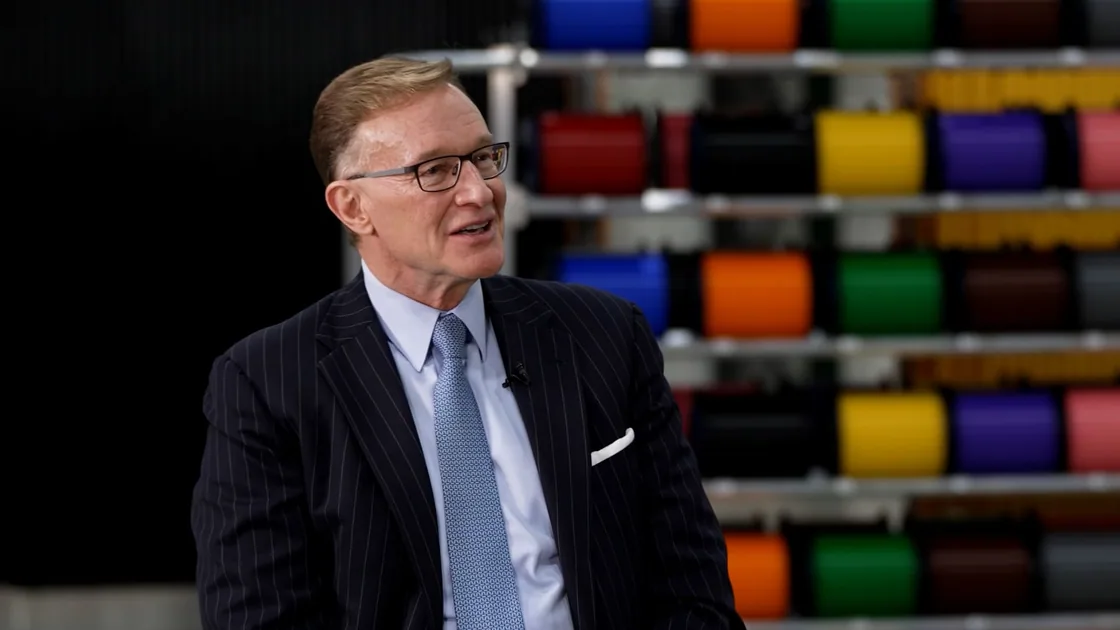
Ciena president and chief executive Gary Smith told investors that the largest hyperscalers had increased 2026 capital expenditure plans, with indications of expansion into 2027 and beyond.

His argument is that companies spending heavily on AI compute will need more network capacity to move data for training, ingestion and inference.

That matters here because AI infrastructure spending is often discussed through chips, power and data center shells.

Ciena is framing the next bottleneck as high-capacity, low-latency connectivity across long-haul routes, metro networks and data center interconnects.

If that view holds, optical systems could capture a larger share of the AI budget as customers try to monetize constrained compute investments.

The products behind the forecast

The company pointed to several demand channels rather than one product line.

RLS Hyper Rail, Ciena's next-generation intelligent line system, was developed with multiple hyperscalers and is aimed at capacity and efficiency requirements around data centers.

Smith said Ciena had received what he described as the industry's first multirail order from a leading hyperscaler for the platform.

RCR Wireless News also reported that RLS Hyper Rail can run several fiber-pair paths side by side across long routes measured in hundreds of kilometers, using amplification to extend capacity.

The signal is narrow but important: Ciena has an early hyperscaler order, while additional hyperscalers, neocloud providers and service providers are still in evaluation discussions.

Ciena also cited momentum in Data Center Out-of-Band Management, or DCOM, which combines routing and switching products with passive optical network technology.

Smith said DCOM contributed to 88% year-on-year revenue growth, and that Ciena had initial orders from a second hyperscaler customer in addition to Meta, with a third hyperscaler moving through lab qualification.

Carriers are part of the exposure

The affected market is wider than hyperscale cloud.

Ciena also sees carriers returning to network spending after a restrained investment period, with openings in long-haul, metro and managed optical fiber networks.

That makes the forecast relevant to carriers trying to support AI traffic without turning every investment cycle into a full data center buildout.

The company also reported a new win with a major hyperscaler for high-performance coherent modules.

Those modules are expected to be deployed across metro and long-haul data center interconnect networks that support both WAN and data center applications.

Management also expects 400G and 800G pluggable optics to remain a growth line, with pluggable revenue projected to exceed twice the 2025 level.

What has to prove out next

The forecast still depends on order conversion.

A $50 billion addressable-market target does not by itself prove that AI networking demand will spread evenly across vendors or customers.

What matters now is whether Ciena's early hyperscaler wins expand into repeat deployments, whether service-provider reinvestment continues, and whether DCOM's growth can hold after the first wave of hyperscaler adoption.

Ciena is preparing for that demand with spending of $250 million to $275 million in capital expenditures this year, including manufacturing and supply-chain capacity.

The question is whether optical networking becomes a sustained part of AI infrastructure budgets, or whether the current demand is concentrated in a small number of aggressive hyperscale builds.
Share this article
inXf

Related articles

More
Ciena Says AI Data Centers Will Need More Than One Optical Network Design
Telco & Connectivity

Ciena Says AI Data Centers Will Need More Than One Optical Network Design

Ciena executive Helen Xenos says AI data center interconnect will mix coherent optics, photonic line systems, full-spectrum transponders, co-packaged optics and liquid cooling as scale-across deployments push capacity and reliability demands higher.

Amazon-Corning Fiber Deal Puts Optics Inside The AI Data Center Bottleneck
Cloud & Data Centers

Amazon-Corning Fiber Deal Puts Optics Inside The AI Data Center Bottleneck

Amazon has reached a multi-year optical fiber and networking agreement with Corning, adding North Carolina manufacturing jobs and highlighting fiber capacity as a practical constraint in AI data center expansion.

Lumilens Raises $700 Million as AI Data Centres Hit Network Limits
Cloud & Data Centers

Lumilens Raises $700 Million as AI Data Centres Hit Network Limits

Frontier Enterprise coverage shows Lumilens raising more than $700 million at a $5.51 billion valuation after its optical interconnect product moved into a hyperscaler’s production AI data centres.

AI Inference Traffic Pushes Telecom Networks Toward a New Planning Problem
Telco & Connectivity

AI Inference Traffic Pushes Telecom Networks Toward a New Planning Problem

Light Reading says AI inference could create longer and more upstream-heavy telecom traffic than video-era networks were built to handle. Analysts cited in the report point to hyperscalers influence over optical transport, data-center interconnect and subsea capacity planning. Operators face a visibility gap because no comprehensive public study maps AI traffic patterns, even as the sector spends more than $600 billion in capex.

AFL’s AI Interconnect Thesis Moves Data Center Networks Into The Bottleneck
Telco & Connectivity

AFL’s AI Interconnect Thesis Moves Data Center Networks Into The Bottleneck

AFL’s Noah Taylor framed data center interconnect as a critical constraint for AI infrastructure, arguing that hyperscale networks now need denser fiber, faster deployment and tighter ecosystem integration as inference shifts more traffic upstream.

India's 8.33 GW Data-Center Pipeline Tests AI Infrastructure Readiness
Cloud & Data Centers

India's 8.33 GW Data-Center Pipeline Tests AI Infrastructure Readiness

Knight Frank India says the country's data-center development pipeline has reached 8.33 GW, with Mumbai, Hyderabad and Chennai showing how AI demand is turning capacity, power, fibre and subsea links into strategic constraints.

EchoStar's $183 Million Payment Delay Raises the Clock on Its AT&T Spectrum Sale
Telco & Connectivity

EchoStar's $183 Million Payment Delay Raises the Clock on Its AT&T Spectrum Sale

EchoStar delayed a $183 million interest payment while waiting for proceeds from its pending $23 billion AT&T spectrum sale, a deal tied to FCC approvals, Dish Wireless infrastructure claims and the Boost Mobile shift onto the AT&T network. The company said the missed payment is a default but has a 30-day grace period and expects roughly $20.25 billion in net closing proceeds. The FCC also required a $2.4 billion escrow tied to potential tower and infrastructure claims around Dish Wireless.

AI Data Centres Face 617 Million-Ton E-Waste Warning
Cloud & Data Centers

AI Data Centres Face 617 Million-Ton E-Waste Warning

A Basel Action Network report covered by The Verge warns that AI infrastructure could create 395 million to 617 million metric tons of e-waste by 2050 when data-center support systems are counted.

Keep Reading

More Stories

Latest
Kepler Targets 2027 Production for HBM Replacement MemoryCloud & Data CentersOct 6, 2026Kepler Targets 2027 Production for HBM Replacement MemoryEE Times reports that Kepler Computing is preparing 3D ferroelectric memory for 2027 production, promising higher capacity and bandwidth per watt while limiting reliance on advanced-node lithography.Yokogawa Opens Singapore Hub For Industrial Cyber ResilienceCapital & PolicyOct 6, 2026Yokogawa Opens Singapore Hub For Industrial Cyber ResilienceYokogawa Engineering Asia has launched a Singapore center focused on OT cyber resilience, training, response planning and recovery coordination for Southeast Asia, Oceania and Taiwan.ClickFix Attack Uses Browser Cache To Hide Malware PayloadCybersecurityOct 6, 2026ClickFix Attack Uses Browser Cache To Hide Malware PayloadMicrosoft Threat Intelligence traced a ClickFix cache-smuggling method that preloads malware into browser caches, then uses file size checks and a pasted Run command to launch later credential-theft stages.VOA Tests Six-Month Startup Buildout Before Funding DecisionsFintech & Digital PaymentsOct 6, 2026VOA Tests Six-Month Startup Buildout Before Funding DecisionsTechCabal’s interview with VOA Venture Partners founder Victoria Olayide Adesanya describes a six-month build programme that lets the firm work inside African financial-infrastructure startups before deciding whether to invest.Bitcoin Holds $86,000 As Dollar Index Hits 18-Month HighCrypto/Web3Oct 6, 2026Bitcoin Holds $86,000 As Dollar Index Hits 18-Month HighCoinDesk reported that bitcoin stayed near $86,000 while the U.S. Dollar Index reached about 102.5, with U.S. rate expectations and European political risks strengthening the dollar backdrop.Google Freezes OSS Bug Bounty Reports After AI Submission FloodCybersecurityOct 6, 2026Google Freezes OSS Bug Bounty Reports After AI Submission FloodGoogle has stopped accepting new product vulnerability reports in its OSS VRP after invalid automated submissions swamped reviewers, while older reports and some Cloud VRP routes remain open.Fleuret AI Raises €4M For Continuous AI Pentesting PlatformCybersecurityOct 6, 2026Fleuret AI Raises €4M For Continuous AI Pentesting PlatformTech.eu reported that French startup Fleuret AI raised €4 million in pre-seed funding to develop an agentic-AI platform that turns penetration testing into a continuous security process.GFT Analysis Says AI Documentation Can Cut Maintenance Work 30%Fintech & Digital PaymentsOct 6, 2026GFT Analysis Says AI Documentation Can Cut Maintenance Work 30%A GFT Technologies analysis says AI-linked software documentation can cut maintenance effort and speed developer onboarding when knowledge assets stay synchronized with code changes.Schneider Electric Lines Up $22.6 Billion PTC DealAIOct 5, 2026Schneider Electric Lines Up $22.6 Billion PTC DealSchneider Electric plans to buy PTC in a cash transaction valuing the US engineering software provider’s equity at about $22.6 billion, adding product-lifecycle software to its industrial AI push.Aggarwal Pledges Ola Electric Stake To Fund ₹1,000 Cr Rights IssueCapital & PolicyOct 5, 2026Aggarwal Pledges Ola Electric Stake To Fund ₹1,000 Cr Rights IssueOla Electric founder Bhavish Aggarwal pledged 20 Cr shares to finance his participation in a rights issue that forms part of a larger ₹1,500 Cr fundraising plan.Natrona Schools AI Review Puts Student Privacy Ahead Of Classroom Tool UseAIOct 5, 2026Natrona Schools AI Review Puts Student Privacy Ahead Of Classroom Tool UseNatrona County trustees questioned whether teacher AI tools expose student data, even as existing district rules already ban unauthorized generative AI use by students.AMD Prices 256-Core EPYC 9996 At $14,904 For Server BuyersChips & SemiconductorsOct 5, 2026AMD Prices 256-Core EPYC 9996 At $14,904 For Server BuyersTechRadar reports that AMD’s 6th Gen EPYC 9006 “Venice” lineup includes a 256-core EPYC 9996 with 512 threads, 1GB of L3 cache, a 600W default power rating and a $14,904 list price for 1,000-unit orders.